So, my relationship with pride was one of polarity. On the one hand there was this desire of being acknowledged, validated, appreciated, encouraged and admired. And within the belief that the only thing ‘adults’ liked and appreciated me for were my ‘performance levels’ – I started defining myself/my value entirely in terms of people being proud of me and me being proud of myself. So, that energy of pride became a ‘necessity’ – if there was no pride, either from others or from myself, then how did I matter?
On the other hand – any miss-step, any mistake, or the possibility of a mistake became huge fears, and these were parts of myself I would try to hide at all cost.
So, on the one side I was trying to be visible/seen/noticed, but on the other I was hiding and isolating myself.
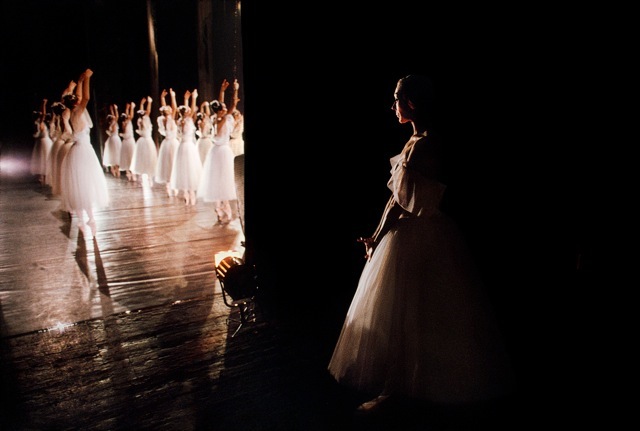
So – within this Pride Character I found myself participating in two ‘opposing’ forces – an outward one and an inward one. And, interestingly, in looking at the word ‘Pride’ – it reflects this duality. Within the sound of the word ‘Pride’ one can see the words ‘prize’ and ‘hide’. ‘Prize’ in terms of winning, being the best, getting to be on the stage an in the spotlights. ‘Hide’ then of course, the opposite of wanting to hide in the shadows and not allow people to see one’s mistakes/failures or even the fact that one is capable of making mistakes or fail.
This dynamic started playing out within myself as well – meaning – I would start giving myself pats on the back when I thought I did something well and I would hide my mistakes from myself – trying to convince myself that I was innocent in the matter or any other forms of self-manipulation consisting of excuses and justifications so I wouldn’t need to admit and face up to my mistakes.
I’ll continue in my next post.
Learn more »
This blog-post is a continuation to the post 'Day 141: Pride - The Root of All Sin?', please read it for context.
 In my previous post, I mentioned how I connected pride to ‘being proud’ when having accomplished something, where when I had done something ‘well’, I was placed in the limelight for a moment as a congratulation on my success.
Within my childhood, these moments were frequent. It started when I was in my ‘3rd toddler class’ – the year before first grade. In that year, my brother had started to teach me how to read. I’m not entirely sure how it started, but I think I was just fascinated by the things he was learning since he was 4 years older than me and I probably asked him to teach me how to read, or he just proposed to teach me. So, when we had time, he would teach me how to read letters and I started learning to read one-syllable words. In third toddler class, you mostly just play all day, but I started sitting with a piece of paper and try to write words. I would practice the ones that Gabriel, my brother, had taught me and I would try new ones on my own. I asked my teacher to check it once and she asked how it is I knew how to read and write, so I told her my brother had taught me some. One day she gathered the whole class and together we went to the first grade class. She said ‘I have something to show everyone! Maite here can read already! You don’t have to believe me, I’ll show you’. They had a train with letters and she started taking pieces of the train to form words, I was anxious, because, well, I only knew so many words, so I was hoping she wouldn’t make a word I didn’t know how to read. She made the word ‘sun’ and asked me to read it. I was relieved, I knew that one, so I said ‘sun’. Then she did a few others, and I knew them all. Everyone clapped and I felt a bit awkward. For one, because I wasn’t sure why they were making a big deal out of it – I just had an interest and did it for myself, I enjoyed it. Second, because I couldn’t REALLY read, I only knew one-syllable words and not even all of them, so I felt like a fraud.
From then on, I created a reputation of being ‘smart’. For my first graded report in 1st grade, I had the maximum marks on all tests and so had 100% on my report. That day, I had taken a ride with my friend to ballet class and my mom had gone to pick up my report, so I didn’t know what it said. When I came home from ballet class, I found my mother in tears. I thought ‘oh no, was it that bad!’ Then she came and she hugged and kissed me and I still didn’t understand what was happening. My brother came and showed me the report and said: ‘you have 100%!’ I looked at the report, and it showed all the tests and the marks, which were all the maximum ad then the ‘sum’ of 100% at the bottom. I thought, well, yes, I knew all the answers, so it makes sense, no? Again I didn’t understand why it was such a big deal, because I just did what they told me to do and answered the questions on the tests. I understood everything, so I could answer everything. But it seemed, from how they were behaving, that this wasn’t normal. I wasn’t sure why they were proud of me, because I didn’t ‘do’ anything special, I just ‘did it’.
And it continued like that mostly throughout my school years, I didn’t have any problems with anything really. When I got to 4th grade, my mom started becoming worried about me. I’m not sure why, but she thought I was changing and she thought I must be bored in school. She asked me if I was and I said ‘maybe, I suppose’. She asked the principal if it would be possible for me to skip a year and I did. I struggled initially when I was trying to catch up with the material from the year before on my own time, but by Christmas I had gone back to top of the class grades.
In anything else I did outside school, I seemed to be ‘naturally’ proficient as well. Whether it was drawing school, ballet, music, flute – I was always in the ‘top of the class’ and each time I was told I was ‘gifted’.
So, within my childhood years, I had many moments where I was placed in the limelight, where people were ‘showing off’ with me or using me as an example to others. Although I enjoyed those moments, because they made me feel good about myself, at the same time I was not happy with the way people saw me and the expectations they had. I felt pressured to perform well in every area of my life. It started to think that people, and specifically adults, liked me only because I was ‘successful’, to call it that. Within this I started becoming more insecure and afraid about making mistakes, because if I wasn’t able to keep up ‘the good work’, then people might start rejecting me, or stop loving me.
Herein I specifically remember a situation in 2nd grade where we were learning the multiplication tables. We would do tests almost every week and then the teacher implemented a system where, after the test she would grade everyone and those with the highest grades would then play the multiplication game. Where, basically, we each started at the back of the class, lined up horizontally and the teacher would state a multiplication calculation and then the first one to should out the answer could take a step forward, the first one to reach the front of the class wins. I was usually part of these games, but I absolutely hated them due to the amount of anxiety and fear I would experience. I would be totally shaking inside and didn’t know how not to feel like that. I would start dreading these games to such an extent, that I decided to just do bad on my test. I felt it was a dilemma, because I was expected to be one of the ‘gamers’. Anyway, I thought the trade-off was worth it. So, I deliberately made mistakes on my test so I wouldn’t be part of those playing the game. And now, that time, of course, the teacher didn’t wait to grade the tests, but just called up the same people who always participate, to do the game. After the teacher had graded the paper, I saw her comment under my mark saying ‘!?!?’
What started happening within all of this is that I started trying to hide my mistakes for fear of letting people down. What people seemed to be expecting was perfection or near perfection, so that’s what I would try to project. ‘I don’t do mistakes’. But within myself I was the total opposite, I was anxious and insecure, and would go into absolute rage when I didn’t get something right.
Learn more »
I have been observing an interesting point that was briefly mentioned in one of the EQAFE interviews of the "Parenting - Perfecting the Human Race" series in myself: that I have the tendency to first want to 'know' how to do something or get an explanation of how something is done, before I am willing to develop the point for myself. I have very much ingrained this pattern from my schooling years where this approach is how things are 'taught' in school - where you are first told and explained the 'rules' you have to follow and only once you have memorized the guidelines and the 'knowledge' part - do you have you put it into practice. This approach of 'teaching' also limits how things are done, because everyone follows the same format, you are already constrained in your expression through the instructions you are taught to follow. An interesting approach would be, for instance, to give children a task to do and to have each one have their own approach, their own perspective, their own style - and from there suggestions can be given in how things can be done more effectively for each individual student.
And so - for myself - every time I am faced with doing something new, I'll have this idea and perception that I can't do it, just because no-one has given me any instructions to follow. And within this, it is clear that I have very much defined self-trust in relation to knowledge - where 'I trust myself' means 'I am confident that I possess the knowledge in terms of how this is done and that I can effectively carry out the instructions contained within it' - lol - sounds quite robotic, right, lol. It's like I first need to be 'fed' a program or a script, so that I can just mindlessly follow the program or script in actual doing.
And, what I have found when I do push myself to just do it - just start somewhere, throw myself into the deep end - I can simply evaluate what I have done and from there, I can see for myself where I require to take a different approach, or where I can improve something and how to improve it in order to get a better result. And it is actually in those moments that self-trust comes in - because it is the seeing of what requires to change that is not based on knowledge or information that requires self-trust. Obviously, there is also always the point of being able to ask for assistance from someone who has already developed the particular skill or who has experience with the particular task to be able to specify one's own application - where, one can make one's own assessment and then ask another to share their perspective as well - and then the points can be merged and transformed into a plan for improvement.
And these attempts and try-outs don't have to be a dreadful thing - one determines this for oneself - when one can walk through the fear in breath and simply be here within and as the experiment, one can easily enjoy oneself - and even in making the assessment and making a plan for improvement. None of these points are inherently 'dreadful' or 'scary' or 'negative' - yet it's how we've often come to define them through our schooling experience - where it is strongly linked to 'not being good enough' or 'doing it wrong' or 'failing'.
So - here some perspective when one sees this pattern in oneself - to consider not placing trust in 'knowledge', but in and as ourselves - to simply walk here, in the moment from a starting-point of self-support. It's not about proving oneself to others and it's not about getting praise - it's about doing it for oneself and to discover who we are when we walk through our self-imposed limitations, fears and resistances!
To start this process, one can find support on http://lite.desteniiprocess.com, which is a free course where one is supported by a buddy - or one can go to http://forum.desteni.org where a group of people will welcome you and be ready to assist!
Learn more »